

Collecting Cars
Collecting Cars: Does the BMW Z8 deserve a place in your collection?

More often than not, at Racing Green Car Storage talk with clients turns to cars with long-term investment potential. Not in a speculative, day-trader sense – but the more considered version. What’s interesting? What’s under appreciated? What has a credible case for long-term gains?
The answers are rarely obvious. Heck, if they were, everyone would already be there. Even so, we sometimes find ourselves discussing the BMW Z8 with clients who want to put their hard-earned money into a diverse range of assets. The trouble is, often their blank expressions betray the fact that this car is flying below their radar and is something of an unknown quantity.
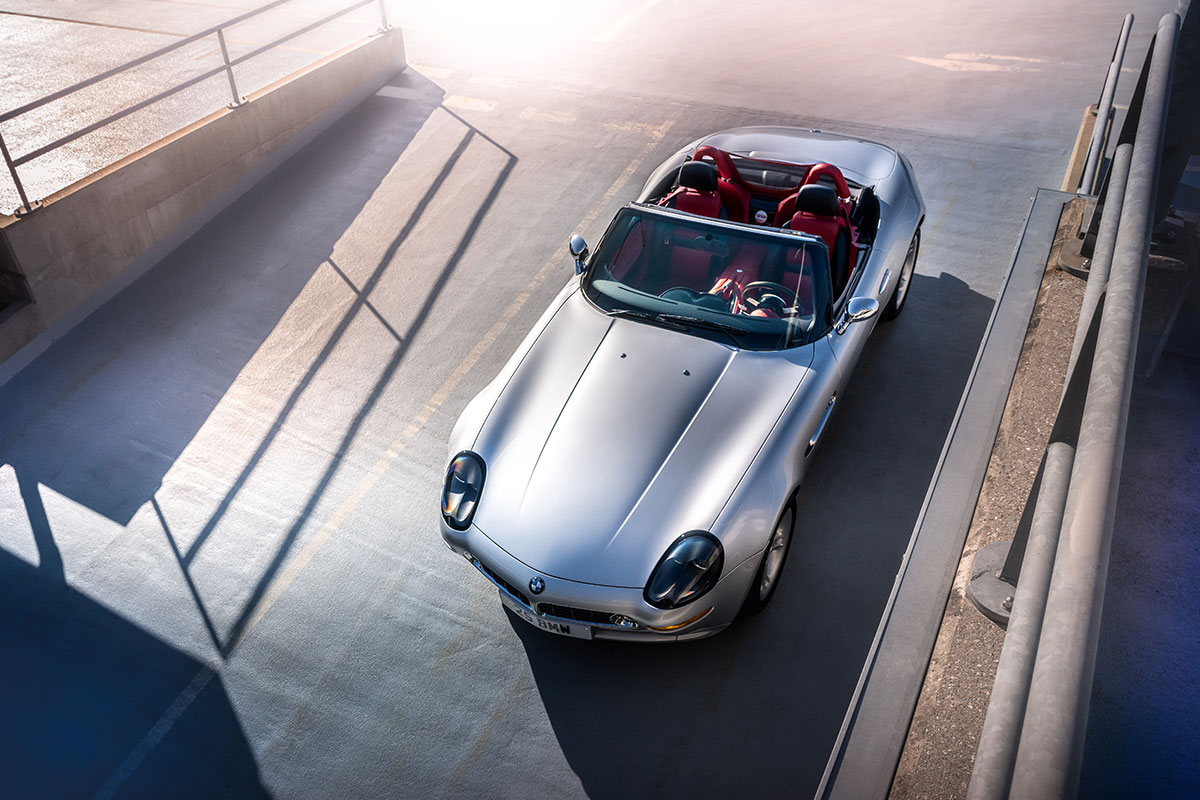
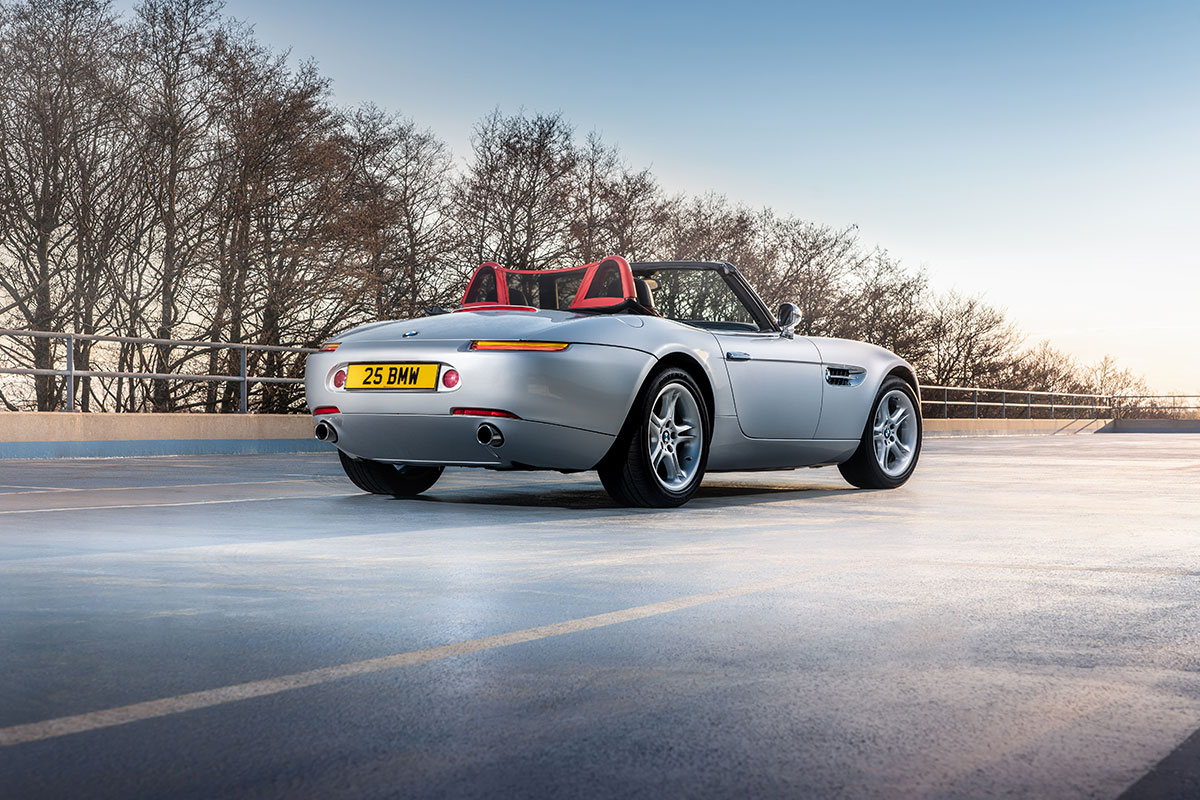
However, it only takes a couple of swipes through photographs to pique their interest. The Z8 is a classically handsome two-seat roadster that has rarity on its side, meaning the chances of another turning up at a cars ‘n coffee are slim, and the interest levels will be high, making it one of those cars that could draw you deep into the social side of the car hobby. If that’s your thing.
That rarity – little more than 100 were officially sold by BMW in the UK, out of a total of 5703 built – also ensures that the Z8 has long been a car that has appealed to car collectors as much as enthusiasts. But understanding what makes it tick and where the market might go with Z8s calls for a bit of background…
In the late 1950s, Max Hoffman – the man credited with willing the Porsche 356 Speedster and Mercedes-Benz 300SL ‘Gullwing’ into existence – convinced BMW that they needed a halo car to conquer America. The result was the 507: a car so breathtakingly beautiful that Elvis Presley bought two, yet so ruinously expensive to build that it nearly bankrupted the company. Only 252 were ever made.
Four decades later, BMW decided to chase that ghost. The mission was "Z07" – a what if scenario: what would the 507 look like if it had never stopped evolving?
The question came out of a glitzy weekend of fine wines, tasting menus and executive backslapping, as the BMW board gathered to pay its collective best wishes to Eberhard von Kuenheim, the departing chief executive of BMW.
On display for the occasion were some of BMW’s most significant cars from its past. Over a glass of the very finest Dom Perignon champagne, Bernd Pischetsrieder – who was to succeed Kuenheim in the top job – and Wolfgang Reitzle, who led product development and had assumed he would be recommended for the top job by Kuenheim, walked around the 507, ran a hand over its curves and slid down into the driver’s seat, before concluding that BMW should make a modern interpretation of the rare roadster.
That task was handed to a young designer at BMW, Henrik Fisker, who worked with just a handful of engineers through the summer break to knock a concept into shape. As Fisker recalls, “I only had five engineers working with me. It wasn’t even officially a project, so we had absolutely no restraints. That’s why the design could be so pure, because it didn’t go through the traditional channels. When we showed it to the board they immediately green lit it without really knowing how we were going to make it. We had to create a whole new platform, which was very exciting as that gave me an opportunity to keep the proportions of the car.”
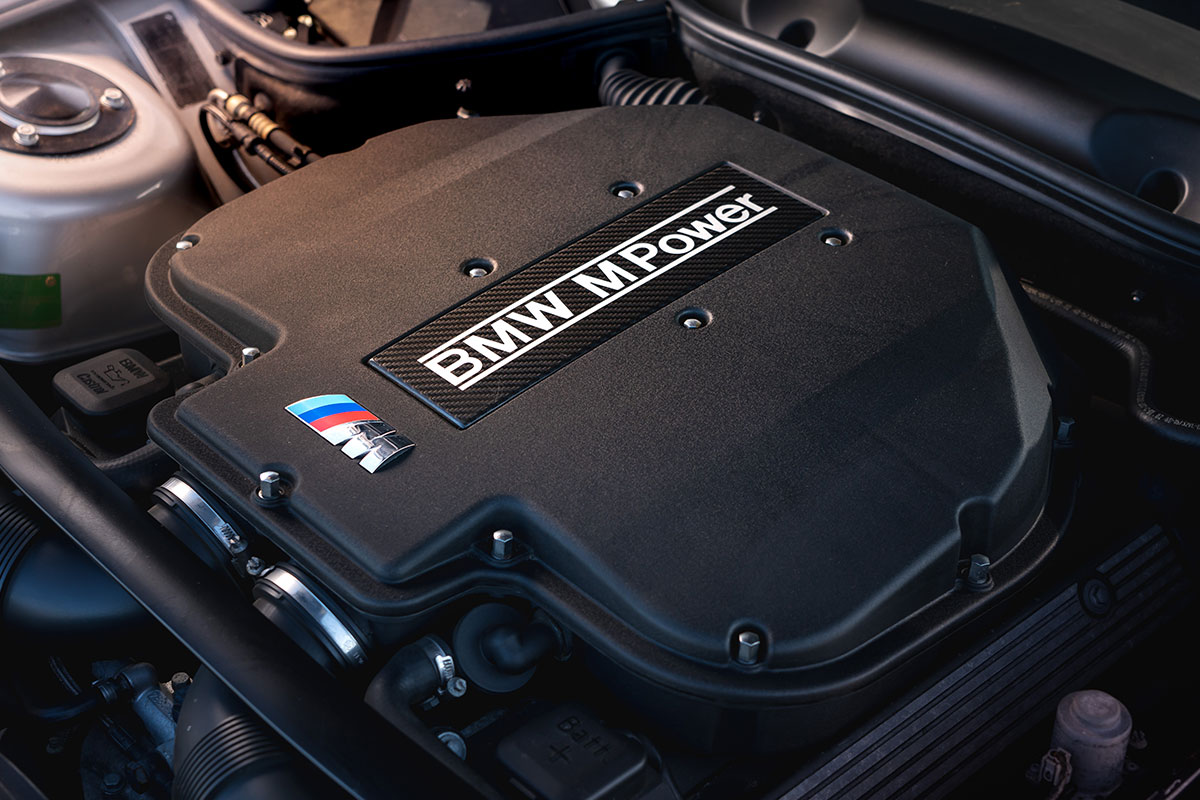
Under the skin of the BMW Z8
When the Z8 arrived at the turn of the millennium, it wasn’t just a car; it was a 400bhp time capsule. It featured the 4.9-litre V8 from the E39 M5, packaged in an all-aluminium spaceframe that felt more like a bespoke sculpture than a mass-produced vehicle. It was, in many ways, the ultimate poster car for the digital age, yet it relied on an analogue soul, with its design clearly influenced by the elegant 507.
To this, BMW fitted the M5’s six-speed manual Getrag gearbox (but not the limited-slip differential) and big brakes from the 750i V12. The roof was electrically powered (but had to be manually pulled closed for the final seal) and, because it only had a plastic rear window, it folded neatly away behind the roll-over bars. As for the interior, it was one of the most striking of its time, a real talking point at a time when an equivalent Porsche 911 was a sea of black plastic. BMW charged £80,000 when it was sold as a left-hand drive-only-model in the UK. That put it among some stiff competition.
With a kerbweight of 1585kg, it was said to weigh 150kg less than the M5 saloon. All well and good, but that’s only slightly less than a V12-powered DB7 Vantage Volante (1622kg) and some way behind the (2+2 but six-cylinder) 911 Carrera Cabriolet (1395kg) and Ferrari 360 Spider (1390kg).

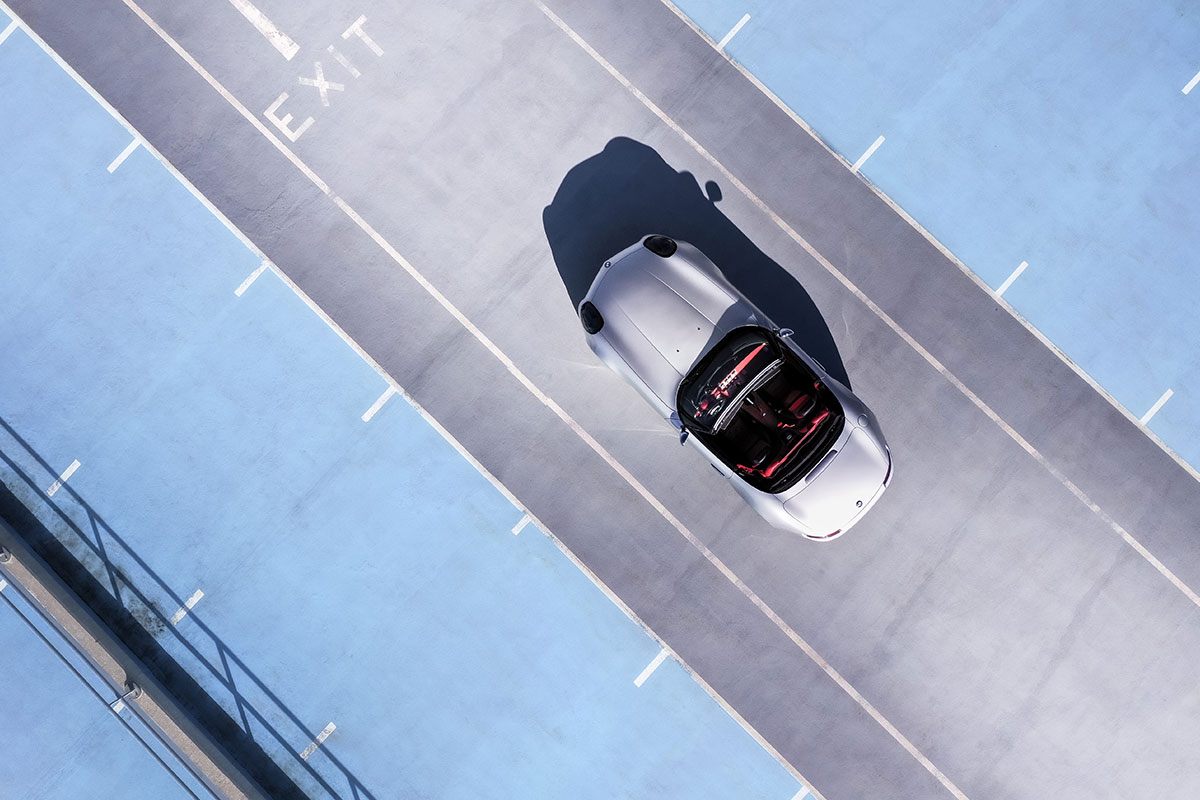
BMW Z8 reviews
The Z8 wasn’t universally praised at the time of its launch. (And for BMW dealers, it wasn’t an easy sell.) Some critics liked how it drove, others felt it was a let-down. Having spent a few days in BMW’s press car, a couple of years back, I think time has been kind to it.
The key slides into an ignition barrel that’s placed where you’d expect a rev counter to sit, a starter button is just below this, while the rev counter, speedo, fuel and water temp dials are in the centre of the dashboard. Pretty much everything you can see and touch in the cabin is bespoke to the Z8. It’s difficult to imagine how the project ever broke into the black for BMW.
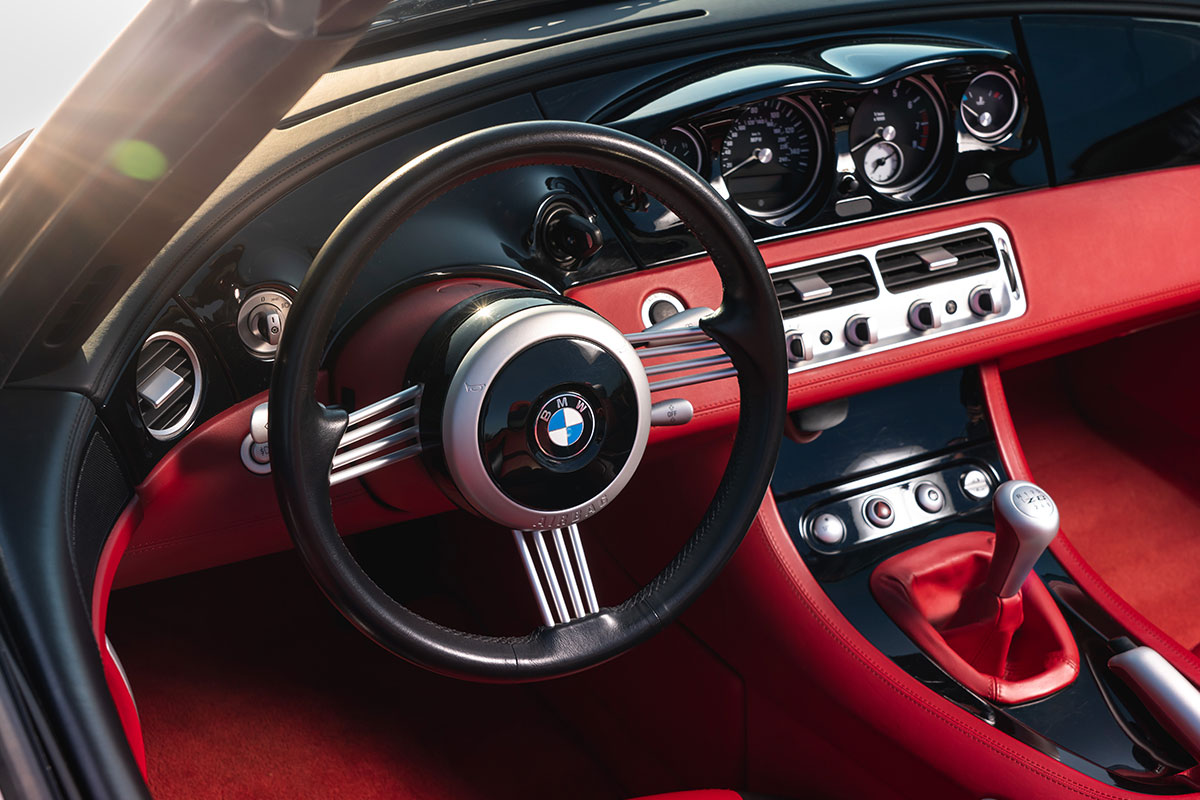
Thankfully, the seating position of the left-hand drive Z8, and pedal arrangement, is good, so there are no problems getting comfortable, even if that expansive bonnet feels daunting at first, especially as you edge out of a driveway or t-junction.
The V8 initially feels like a pussycat, pulling smoothly and eagerly from less than 1000rpm, even in sixth gear, but as the revs build so the Z8’s character changes. It is far more vocal than the M5 ever was, sitting somewhere in the middle ground between a TVR Griffith and Chevrolet Corvette – especially with the roof down as you wind it past 3000rpm and venture toward the 7000rpm red line – and the floor-hinged throttle response is a delight when in Sport (frankly, Sport should be the default setting).
It’s plenty quick enough for road driving. It will launch from standstill to 60mph in 4.8 seconds and pass 100mph in 11.1, while its in-gear acceleration feels equally impressive. Once past 4000rpm the engine is really singing, but even when pottering through a village the rumble from the standard exhaust will put a smile on your face.
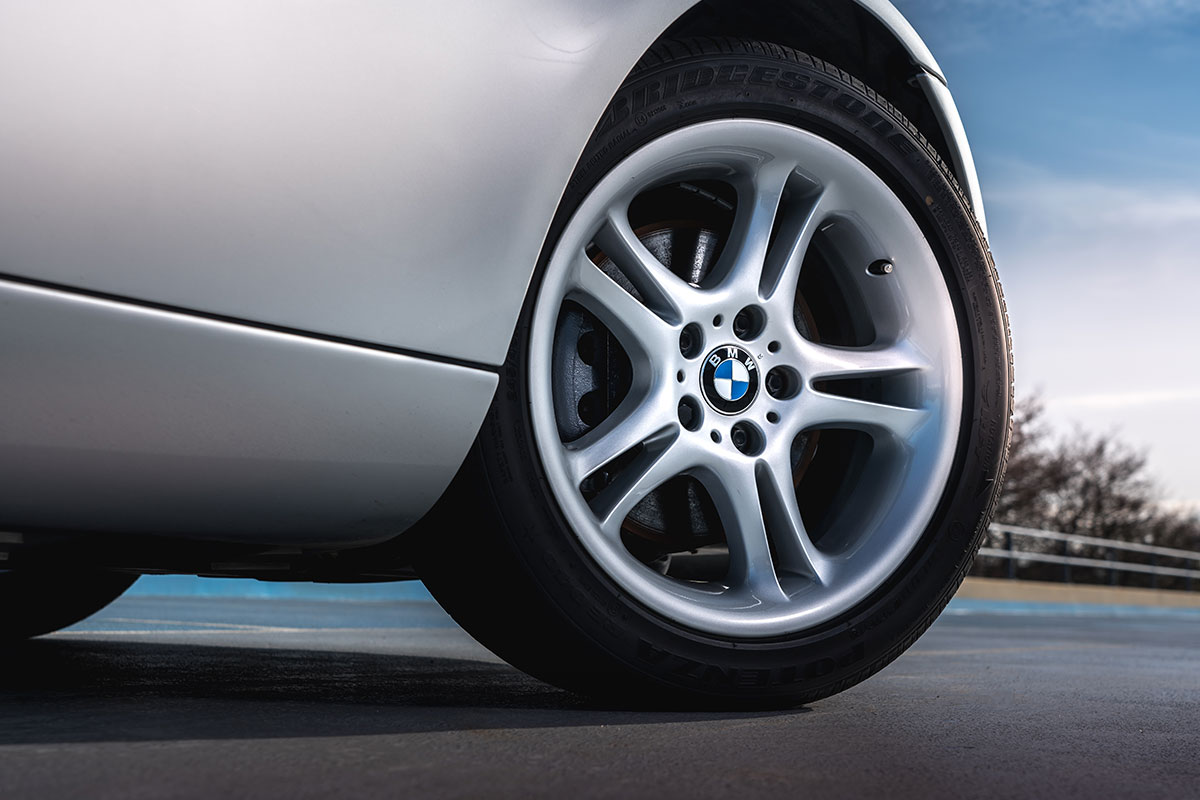
What lets it down is the fidgety effect of the runflat tyres. Many owners are said to change these for regular rubber, and the effect is said to be transformative. As it is, the fundamental principle of a big V8 up front driving the back wheels is hugely appealing. Let the Z8 settle down in a corner, load it up progressively then keep the throttle nailed and you can indulge your inner hooligan while getting clear, confidence-inspiring feedback from the steering and seat of your pants.
BMW Z8 investment potential
The Z8 ticks the rarity box and the fun-to-drive box. But what about its investment potential?
In some ways it has already shown itself to be a nose ahead of contemporary sports cars. As a rule of thumb, and when comparing the standard models, you’ll have to pay more for a Z8 that you would the DB7 Vantage Volante, 360 Spider or 911 Cabriolet. In fact, at the time of writing, comparing cars available in the UK market a low mileage Z8 commands more than twice as much as a low mileage 360 Spider. Looking at advertised Z8s in the UK, you’ll need at least £210,000 for a sub-10,000 mile example, while over in the US, (where the highest global price has been paid at auction) someone paid a hefty £396,737 on the Bring A Trailer platform.
According to The Classic Valuer, since 2020 the lowest auction sale price of a Z8 in the UK is £92,192, the highest is £242,000 and the median is £166,288. That’s for 22 Z8s sold, while the sell-through rate is 71 per cent. This all compares very favourably to the manual gearbox version of Ferrari’s 360 Spider.
Whether it can maintain that gap over its contemporaries remains to be seen. But with so much interest in cars of the noughties – so called modern classics – and rarity on its side, we wouldn’t bet against it.
Read more: Blast From The Past: BMW M3 CSL

View Gallery

Subscribe
Sign up to our newsletter to get all the latest news, events and more from the Racing Green team.
By filling out this form, you agree to the terms laid out in our privacy policy


Redefining collector car storage

By filling out this form, you agree to the terms laid out in our privacy policy


Let's start a conversation...
Please note: Your comments will need to be approved before they are shared with our community. Have fun. Don't be rude or mean. Feel free to criticise ideas, not people. Bad behaviour will not be tolerated.
Lorem ipsum dolor sit amet, consectetur adipiscing elit. Suspendisse varius enim in eros elementum tristique. Duis cursus, mi quis viverra ornare, eros dolor interdum nulla, ut commodo diam libero vitae erat. Aenean faucibus nibh et justo cursus id rutrum lorem imperdiet. Nunc ut sem vitae risus tristique posuere. uis cursus, mi quis viverra ornare, eros dolor interdum nulla, ut commodo diam libero vitae erat. Aenean faucibus nibh et justo cursus id rutrum lorem imperdiet. Nunc ut sem vitae risus tristique posuere.
Delete